
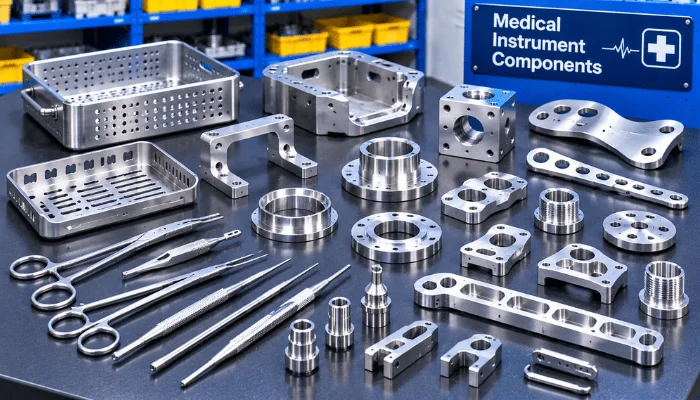
Medical Instrument Components
PRECISION BUILT AROUND YOU
Precision Manufacturing for Medical Instrument Components
HR Industries supports the manufacture of precision components intended for medical instruments, equipment and related engineering applications.
Medical equipment components often require careful attention to geometry, dimensional consistency and surface requirements. Our approach emphasizes the customer's technical drawings, manufacturing specifications and inspection expectations.
We support specialized component requirements through precision-focused manufacturing and experienced engineering coordination.
Request a Quote ↗Applications
Medical instrument assemblies, equipment parts, tooling and precision engineering components.
FEATURES & BENEFITSDetails that make
✓ ✓ ✓ ✓ ✓ ✓
Details that make
the difference.
Customized small engineering parts.
Complex component features.
Drawing-based production.
Detailed inspection considerations.
Prototype manufacturing support.
From specification to component.
01
Review medical instrument components drawings
Review the supplied drawing, component features and critical dimensions. Clarify technical questions before planning medical instrument components work.
02
Confirm material & features
Confirm the specified material, quantities and important component features. Discuss any special finish, inspection or application requirements with our team.
03
Plan tooling & processes
Coordinate the suitable manufacturing sequence, tooling and inspection stages around the drawing and agreed project requirements.
04
Manufacture components
Carry out the agreed component manufacturing work, with attention to drawing details, process coordination and consistent workmanship.
05
Inspect against requirements
Check the relevant features and dimensions against the drawing and customer-defined acceptance criteria before completing the work.
Clear specifications help us plan the right solution.
For medical instrument components, share the latest component drawing, required material and quantity. Include the critical dimensions, finish requirements and any inspection expectations relevant to the application.
Tell our team about the intended use, prototype or production needs, and preferred delivery schedule. We will discuss the manufacturing scope and clarify technical details before preparing a quotation.